
Last updated: October 23, 2026
Quick Answer: The safest starting point for eyelash extension length, curl, and thickness is usually a moderate curl, conservative length, and a finer diameter chosen for the natural lash. For How to Choose Eyelash Extension Length, Curl, and Thickness, the right design specifications should make the eye look lifted and fuller without bending or overloading the real lash underneath.
Start with the natural lash before choosing any numbers
The safest choice often starts with the client’s own lashes, because a 15 mm extension on a fine natural lash can look dramatic but still be a bad fit. A lash artist usually judges three things first: lash health, lash line density, and how much room the lid gives for curl and length. Those three details decide what can sit on the eye without strain.
A simple rule helps: if the natural lash is short, fine, or sparse, choose lighter lash diameters and shorter lengths first. If the natural lash is strong and the client wants a stronger visual effect, there is more room to move up in length or curl. This is why a lash map should not be copied from a trend photo without adjusting for the person in the chair.
The most useful question is not “What looks best?” but “What can this lash line hold comfortably?” That is the difference between a design that lasts and one that twists, droops, or sheds early.
For a broader overview of the service itself, the hub page on what are eyelash extensions can sit beside this guide.
How do I choose eyelash extension length, curl, and thickness?
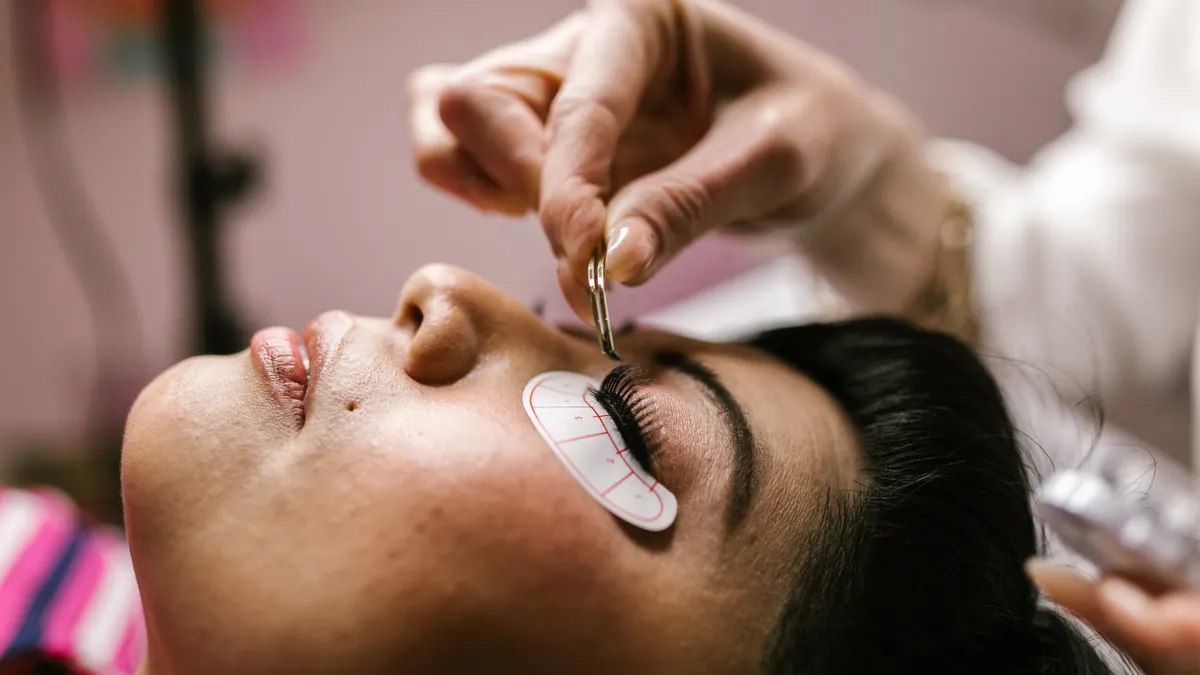
Choose them in this order: natural lash strength, curl shape, then length and diameter. That sequence keeps the design grounded in what the lash line can support instead of starting from a style wish list.
-
Check the natural lash condition first. Look for straight, downward-pointing, fine, weak, or brittle natural lashes. If the lashes already bend easily, that signals a lighter design is needed. A strong natural lash can support more than a thin, fragile one, but no lash should be overloaded just to chase a bigger look.
-
Pick the curl that works with the eye shape and lid space. J curl is the mildest, B curl is a soft lift, C curl is a standard visible curl, and D curl is a strong curl with a more dramatic finish. If the eye already opens well and the lid has limited space, a milder curl often reads cleaner. If the lashes grow downward or the client wants more lift, a stronger curl may help.
-
Choose the length after the curl is set. A curl already changes how long the lash looks. A 12 mm lash in C curl can appear longer than the same diameter in J curl because the lash projects more upward and outward. That is why length should be judged with the curl in mind, not on its own.
-
Select thickness last, based on what the natural lash can carry. Lash diameters are the actual weight-bearing choice. Thicker diameters create a denser look, but they demand more from the natural lash. Fine natural lashes usually need finer diameters; stronger natural lashes can handle more. If the extension feels heavy in the formula, it is too much for that lash.
-
Map the eye before finalizing the full set. A lash map sets where shorter and longer lashes sit along the eye. Even a good curl and diameter can look off if the longest length is placed where the eye already turns down or where the lid folds inward. Mapping keeps the set balanced from inner corner to outer corner.
-
Step back and check the silhouette. The result should look lifted, even, and believable for the face. If the line looks spiky, droops at the outer corner, or overwhelms the eye, the combination is too strong or the map is wrong.
The trade-off is simple: more curl and thickness give more impact, but they also raise the risk of a heavy or unnatural finish. If the goal is long wear and a clean look, the safer combination often wins.
Which lash curl type fits the eye, not the trend?
The best curl is usually the one that matches the natural growth direction and the amount of lid space above the lash line. J curl, B curl, C curl, and D curl are not just style labels; they change how much the lash lifts the eye and how much visual length the set creates.
J curl is the softest of the group and works well when the natural lashes already point upward or when the client wants a very understated result. B curl gives a little more lift without looking sharp. C curl is the familiar middle ground for many sets because it is visible but not extreme. D curl is the boldest of the standard group and can create a much more lifted effect, especially on lashes that point down.
The common mistake is picking a curl because it sounds flattering instead of checking whether the eye has room for it. A strong curl on a lid with little space can make the set look cramped or push the lash line into the lid crease. That costs the design its clean outline. A gentler curl on the same eye often looks tidier and can wear better.
The right question is not “Which curl is prettiest?” It is “Which curl makes this lash line look open without fighting the natural lash?” That is why eye shape lash mapping matters. A lash map can place different curls in different zones, using a softer curl near the inner corner and a stronger curl through the center when the design calls for it.
If a client asks for a dramatic look, the response should not be automatic D curl everywhere. The better move is to adjust curl by zone, then keep the overall set visually consistent.
What length should eyelash extensions be?
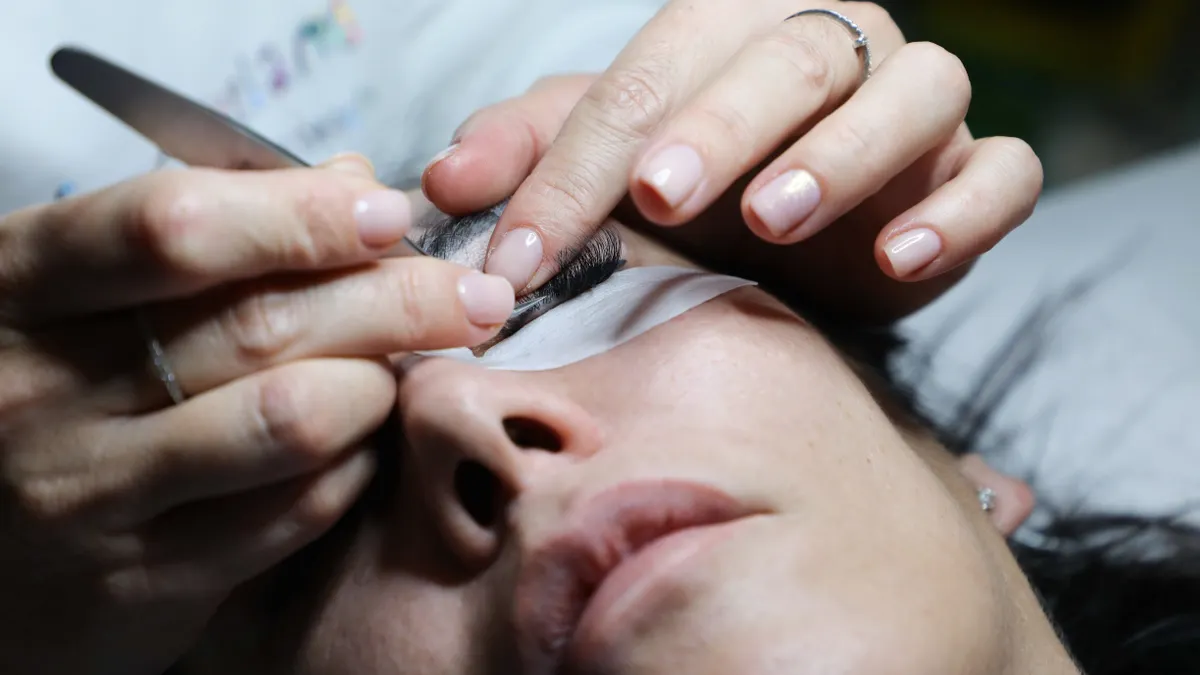
The right length is the shortest length that creates the shape you want without stressing the natural lash. In practice, that usually means starting with conservative lengths and only going longer where the natural lash can support it.
A useful lash length chart is not a single number but a working range. Shorter lengths suit inner corners and fragile lashes. Mid-range lengths suit most of the main lash line. Longer lengths are best used sparingly, often as accent points rather than the whole set. A uniform long set can look heavy even before it feels heavy.
The mistake many people make is choosing length before considering curl. A longer lash with a strong curl can look much more dramatic than the same number in a softer curl. That means a 13 mm D curl may read bolder than a 15 mm J curl in some placements. The eye sees the shape, not just the number on the tray.
A longer extension is not always better for a cleaner result. A very long extension can point past the eye’s natural line, cast a shadow, or create a droop at the outer corner. On the other hand, going too short can make the set disappear on a larger eye shape or under thicker brow framing. The sweet spot is the one that balances those two failures.
A good check is visual, not numerical: if the extension end looks like it is pulling forward too far from the eyelid, the length may be too much for that section. If the eye still looks unfinished after the map is filled, the length may be too conservative for the design goal.
How lash diameter changes safety, fullness, and wear
Lash diameter is the thickness of the extension, and it is the main factor that decides how much weight each natural lash has to carry. A thicker lash can give a denser look, but it also increases the load on the natural lash, so thickness should be chosen with care.
The practical move is to treat diameter as the load-bearing part of the design, but a qualified lash professional should assess the natural lash first. A finer diameter is usually the safer starting point for delicate or sparse natural lashes. A thicker diameter can be useful when the natural lashes are strong and the look calls for more structure. If the lashes are already weak, thick diameters can make the set feel too heavy or sit poorly over time. See the manufacturer’s professional guidance from Lash Base and NovaLash.
This is also where the term “natural lash health” matters most. Healthy lashes are not just about how they look on day one. They need enough strength to support the chosen extension through normal wear. If the lash bends or twists under the extension, the design is too heavy for the hair it sits on.
The common error is chasing darkness by going thicker instead of adjusting the map or curl. That can create a hard-looking set that photographs well for one moment and then looks bulky in real life. A better approach is to use a smarter combination: moderate thickness, a well-placed curl, and a map that does the visual work.
Anyone with a history of fragile lashes should be cautious about going to the thickest option available. This is a beauty choice, but it still has a physical limit. If the natural lash cannot carry the diameter comfortably, the design is wrong.
For more technical context on lash diameter and related design choices, a professional lash educator’s material or a standards-based product guide is more useful than a trend video.
How a lash map turns separate choices into one design
A lash map places different lengths and curls across the eye so the final set looks intentional instead of random. It is the bridge between the numbers on the tray and the face in front of the artist.
A useful lash map usually begins with the shortest lengths near the inner corner, builds through the middle, and then tapers or peaks depending on the effect needed. The exact pattern changes with the eye shape, but the job stays the same: keep the eye balanced. A map can also mix curls, using a softer curl where the lash line needs control and a stronger curl where lift is useful.
This is where a generic article often fails. It lists curl types and lengths as if they were independent choices, but they are not. A 10 mm C curl and a 10 mm D curl do not behave the same way on the eye. A 0.03 diameter lash and a thicker diameter do not create the same feel even at the same length. The map decides how those parts work together.
A good map can prevent the outer corner from looking too heavy and keep the center from rising too sharply. It also helps avoid the “all one note” look, where every lash has the same length and the eye loses shape. That kind of set can be easier to describe, but it is often less flattering than a carefully varied design.
If the finished map looks balanced from a few feet away, that is the sign it worked. If the eye looks lopsided, dense only at one edge, or oddly flat, the map needs more adjustment, not more lash.
What to ask before you book a lash appointment
Ask three things before booking: what diameter the artist plans to use, which curl they recommend, and how the lash map will be adjusted for your natural lashes. Those questions force the conversation onto design specs instead of vague style words.
A strong consultation should include a look at natural lash health and a clear explanation of why a certain curl or thickness is being chosen. If the answer is only “This is what everyone gets,” that is not enough. A proper design should sound like a fit, not a preset.
You do not need to know the entire lash chart to ask smart questions. You only need to know whether the artist is choosing with your lashes in mind. A client with fine lashes may need a lighter diameter and a shorter map. A client with strong lashes may be able to wear a more visible curl or length. The point is not to rule options in or out by trend, but to match the design to the lash line.
This matters because the wrong combination can look good in the chair and feel wrong after. Heavy thickness, too much curl, or too much length can all make a set look less polished over time. A thoughtful artist will explain the trade-off between impact and wear rather than pushing the strongest option every time. For a professional standard of care, see the American Academy of Ophthalmology and Cleveland Clinic.
If you want the safest starting point, ask for a moderate curl, conservative length, and a diameter chosen for the natural lash rather than for a dramatic photo.
Key Takeaways
- Start with the natural lash, not the finish you want on social media.
- J curl, B curl, C curl, and D curl change both lift and visual length.
- Length only makes sense after curl is chosen.
- Thickness, or lash diameter, is the main weight factor.
- A lash map turns individual choices into a balanced shape.
- The wrong combo is usually too long, too thick, or too curled for the natural lash.
What lash curl should I get?
Choose the curl that matches your lash direction and the amount of lid space above the lash line. J curl is the softest, B curl is slightly lifted, C curl is a common middle ground, and D curl is the strongest standard option. If you want a safe starting point, C curl is often the most flexible choice, but a lash artist should adjust it for your eye shape.
How long should eyelash extensions be?
They should be as short as possible while still creating the shape you want. Length depends on curl, eye shape, and natural lash strength, so there is no single ideal number. Shorter lengths work better near the inner corner and on fragile lashes. Longer lengths should be used only where the natural lash can support them comfortably.
What thickness is safest for natural lashes?
The safest thickness is the lightest diameter that still gives the look you want. Fine or weak natural lashes usually need finer lash diameters, while stronger lashes can tolerate more. Thickness is the main weight factor, so it should be chosen conservatively when lash health is the priority. If there is any doubt, ask a qualified lash professional to assess the natural lash first.
Drafted with AI; not yet reviewed by a person.